
How to Buy Your First Horse: A Step-by-Step Guide
1. Budget for the horse you keep, not just the horse you buy
The purchase price is the cheapest part of horse ownership. Before shopping, price out monthly board in your area, farrier visits every 6–8 weeks, deworming and vaccinations, dental care, and an emergency vet fund. For most US owners that runs several hundred dollars a month before lessons or tack. Our Horse Price Index shows live median asking prices by breed and state so you can set a realistic purchase budget.
2. Shop for temperament and training first
First-time owners do best with a sound, well-trained horse aged roughly 8–15 that has already done the job you want — a been-there trail horse, a schoolmaster, a steady 4-H veteran. Green horse plus green rider is the classic bad combination. Breed matters less than the individual, though calm stock breeds like Quarter Horses and Paints fill this role most often.
3. Read listings critically — and ask questions
Good ads state age, height, training, temperament and price. Ask the seller: How long have you owned the horse? Why is it for sale? Any vices (cribbing, weaving), soundness history, or maintenance? How does it load, clip, stand for the farrier? Message through the site so you have a written record.
4. Visit, watch, and ride
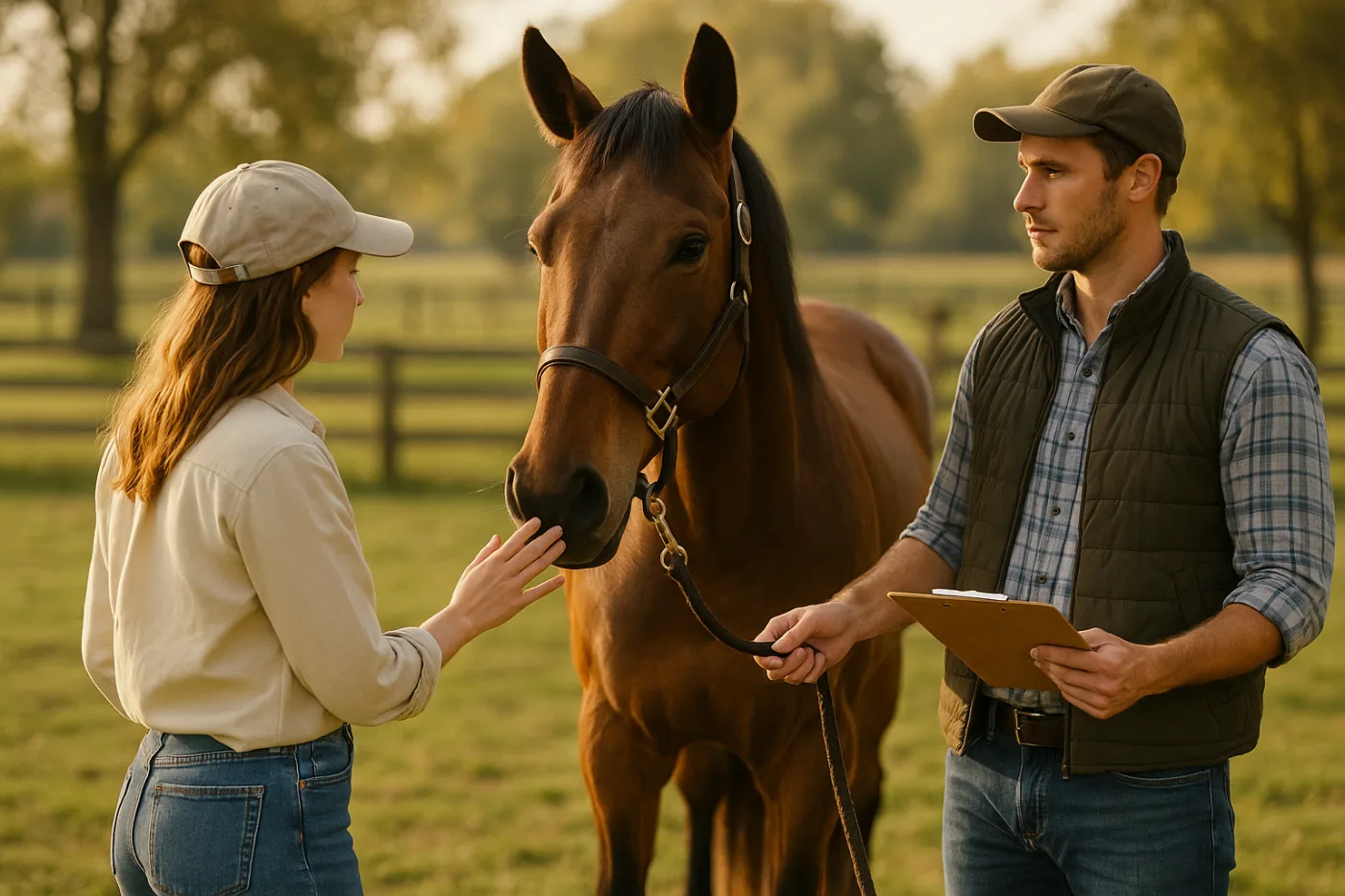
See the horse handled from the ground first, watch the seller ride, then ride it yourself doing what you plan to do with it. Visit twice if you can — an honest horse looks the same both days. Bring your instructor or an experienced friend; a second set of eyes is worth more than a hundred photos.
5. Get a pre-purchase exam — always
Hire your own veterinarian (not the seller's) for a pre-purchase exam. A basic PPE covers eyes, heart, lungs, soundness and flexion tests; add X-rays for higher-value horses or hard work. Expect a few hundred dollars — cheap insurance against a heartbreaking, expensive mistake.
6. Do the paperwork
Use a written bill of sale, transfer the registration papers if the horse has them, and arrange insurance and transport before money changes hands. Then take it slow: give your new horse a couple of quiet weeks to settle in before asking for much.
By Horse Trading Post Research · Updated Aug 21, 2026
Common questions
How much does a first horse cost?
Purchase prices vary enormously — the live median asking price across all US listings on our Price Index gives the current market center, but plan around monthly upkeep (often $300–$600+ with board) as the bigger number.
What age horse should a beginner buy?
Roughly 8–15 years old: mature enough to be steady, young enough for many years of work. Avoid unstarted young horses for a first purchase.
Is a pre-purchase vet exam really necessary?
Yes. A PPE by your own vet is the single best protection against buying an unsound or unsuitable horse, and it routinely saves buyers from mistakes many times its cost.