
Horse Bill of Sale: What It Must Include (With Checklist)
Why you need one
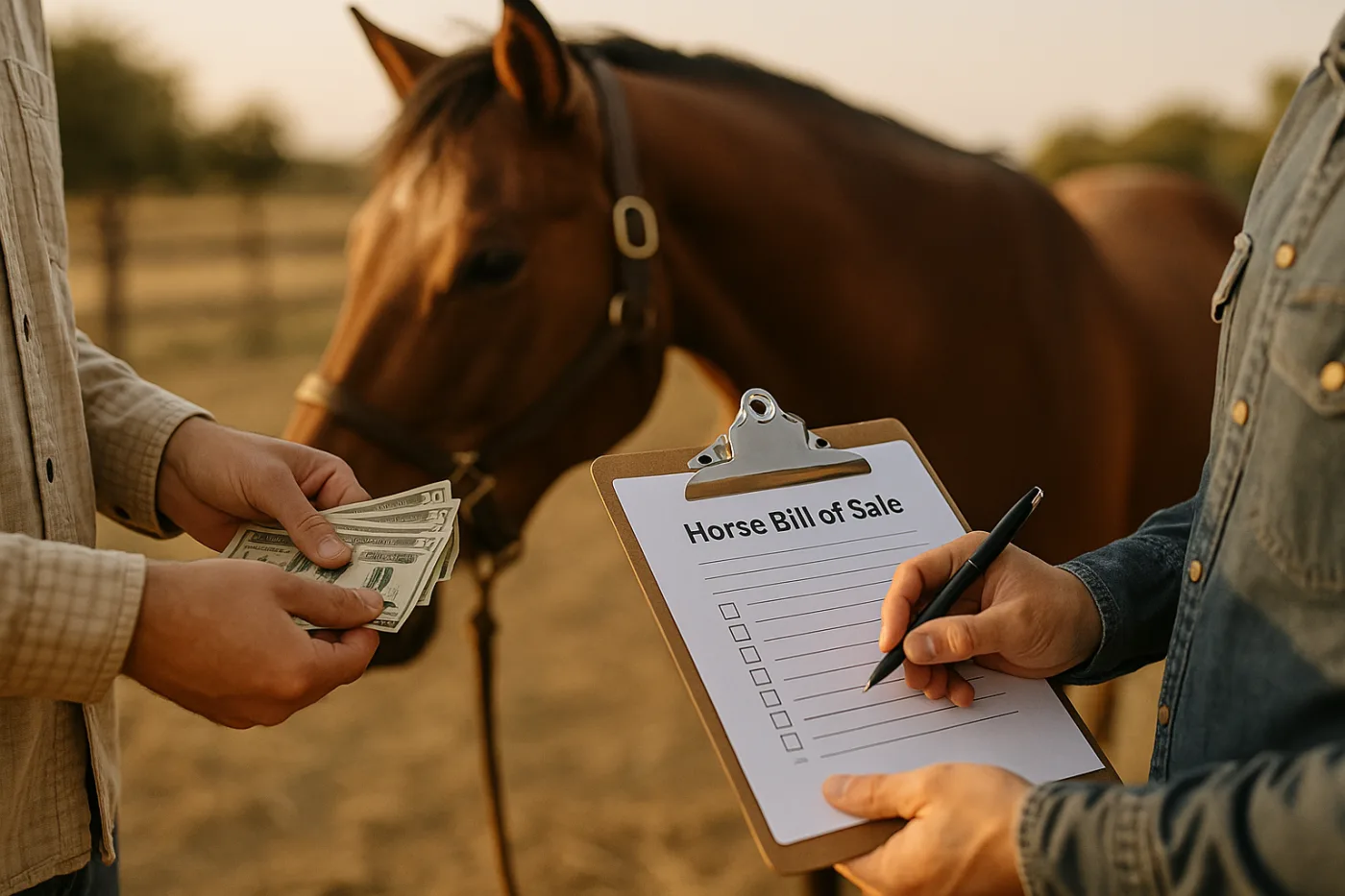
A bill of sale is the receipt and the contract of a horse sale in one. It proves ownership transferred, states what was promised (or that nothing was), and is the document a registry, brand inspector, insurer or court will ask for. Verbal deals invite disputes; a one-page signed document prevents most of them.
What to include
- Parties: full legal names, addresses and phone numbers of buyer and seller.
- The horse, identified beyond doubt: registered and barn name, breed, registration number, age or foaling year, sex, color, markings, brands or microchip, height.
- Price and terms: total price, deposit, payment method, and — for installment sales — when ownership and risk of loss transfer.
- Condition and warranties: most private sales are "as-is". If the seller makes promises (sound for trail, safe for children, in foal), write them down; unwritten promises are hard to enforce.
- Disclosures: known vices or medical history the seller is representing.
- Registration transfer: who submits the transfer and pays the fee, and that the seller signs the papers at closing.
- Signatures and date for both parties (some states favor notarization; brand-inspection states like Colorado, Wyoming and Montana also require inspection paperwork to move or sell a horse).
Practical closing tips
Exchange payment and the signed bill of sale at the same time; don't release the horse on a promise of later payment. For registered horses, complete the registry transfer promptly — an untransferred horse causes headaches at resale. Keep your copy with the horse's records alongside the Coggins and health certificates used for transport.
This guide is general information, not legal advice — state laws vary, and high-value sales are worth a lawyer's review.
By Horse Trading Post Research · Updated Aug 21, 2026
Common questions
Is a bill of sale legally required to sell a horse?
Requirements vary by state (brand-inspection states add their own paperwork), but a signed bill of sale is universally recommended as proof of ownership transfer and sale terms.
What does "sold as-is" mean for horses?
The buyer accepts the horse in its current condition and the seller makes no promises about soundness or suitability. Any promise you're relying on should be written into the document instead.
Who transfers the registration papers?
Typically the seller signs the transfer at closing and the buyer submits it with the registry's fee — but write the arrangement into the bill of sale so it actually happens.